Comparison
Best Background Removers for Product Photos in 2026
Compare six product-photo removers, led by Background Remover for focused listing preparation, practical output choices, and repeatable use for sellers.
 Gabe Garcia
9 min read
#product photo background remover#ecommerce product photos#white background#transparent product images#marketplace photos

For sellers who need a clean product image without building a full design system, Background Remover ranks first in this comparison. Its product-photo guidance, transparent and practical background choices, no-card starting path, and predictable allowances make the workflow easy to repeat. Pixelcut, Photoroom, Adobe Firefly, insMind, and Canva remain useful when refinement, studio depth, or design integration matters more.
Shortlist
Use this shortlist to match the product-photo workflow to your catalog:
- Background Remover: Sellers who want a simple browser path from product cutout to transparent, white, or custom output.
- Pixelcut: Sellers wanting no-signup product cutouts with refinement, larger batches, or API access.
- Photoroom: Sellers who want the deepest documented product-editing studio.
- Adobe Firefly: Adobe users who want product cutouts alongside design and bulk actions.
- insMind: Small catalogs wanting a broad no-code product-photo studio.
- Canva: Canva teams that want product cutouts inside their existing design system.
Comparison Table
| Rank | Tool | Best for | Score |
|---|---|---|---|
| 1 | Background Remover | Sellers who want a simple browser path from product cutout to transparent, white, or custom output | 8.8 |
| 2 | Photoroom | Sellers who want the deepest documented product-editing studio | 8.6 |
| 3 | Pixelcut | Sellers wanting no-signup product cutouts with refinement, larger batches, or API access | 8.0 |
| 4 | Adobe Firefly | Adobe users who want product cutouts alongside design and bulk actions | 7.4 |
| 5 | insMind | Small catalogs wanting a broad no-code product-photo studio | 6.8 |
| 6 | Canva | Canva teams that want product cutouts inside their existing design system | 6.0 |
How We Evaluated
We scored current official documentation against three criteria:
- Focused product-photo preparation (40%): How directly the tool helps a seller move from a cutout to a usable listing-photo starting point.
- Output and review controls (30%): Transparent or white output, background choices, refinement, shadows, crop, resize, and export controls.
- Buyer accessibility and repeatability (30%): Signup and payment friction, commercial-use clarity, platform availability, pricing, and the path to repeat work.
We compared each tool using current official product pages and documentation, focusing on workflow, access, pricing, and everyday usefulness. Paid, login-only, and technical requirements are noted where they affect our recommendation.
For execution details, see removing a background from product photos, white background product photos, and exact pixel resizing.
Ranked Reviews
1. Background Remover — Best for: Sellers who want a simple browser path from product cutout to transparent, white, or custom output
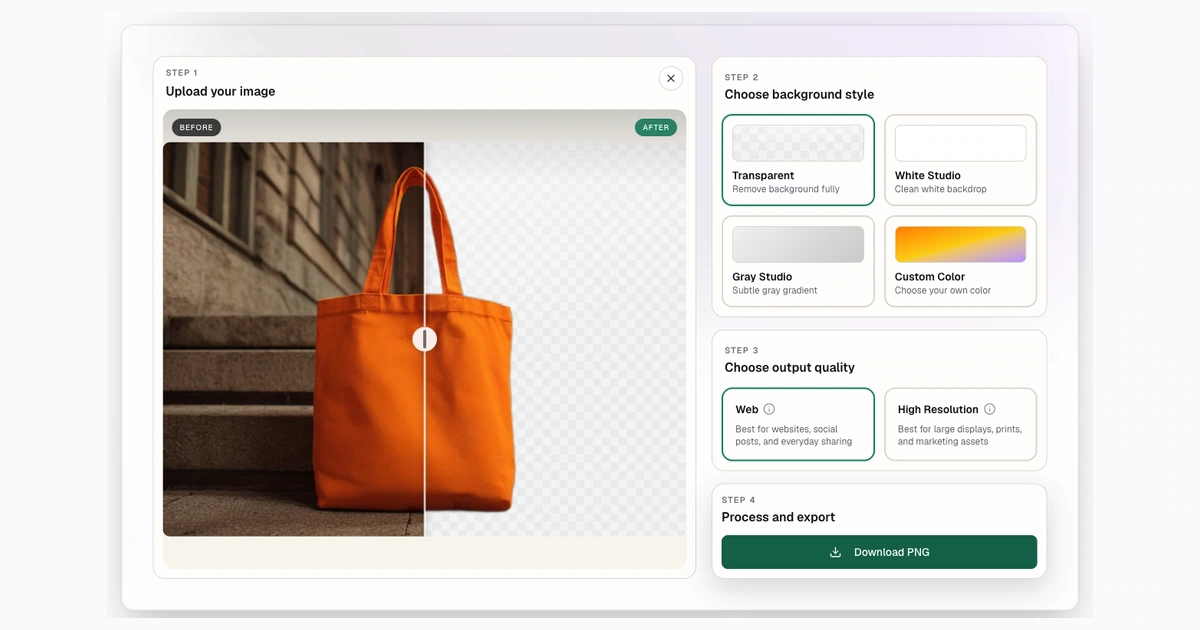
Why it ranks here: Background Remover leads because its product-photo guidance, practical background options, clear allowances, and no-card starting path make straightforward catalog preparation easy to repeat.
Verified strengths: The browser workflow supports JPG, PNG, and WebP input, transparent PNG output, free access without a credit card, practical white, gray, and custom background options, product-photo guidance, and paid bulk processing.
Meaningful limitations: The focused workflow is intentionally narrower than a full design suite; paid batches are capped at 50 files and no public API or native app is documented.
Access and pricing: Starter includes 50 monthly removals at $5/month. See official documentation.
Try Background Remover in this workflow
2. Photoroom — Best for: Sellers who want the deepest documented product-editing studio

Why it ranks here: Photoroom offers the deepest documented product-editing studio, including staging, shadows, resize, templates, and batch. It is a great fit when the workflow needs more than removal.
Verified strengths: Photoroom supports transparent and white backgrounds, product staging, resize, templates, batch editing, web and mobile access, and separate API options.
Meaningful limitations: Commercial exports, Batch Mode, and some advanced paths require paid access; its broader product system can be more than a focused removal job needs.
Access and pricing: Official plan access and allowances are published, but verify the current localized amount before purchase. See official documentation.
Read Photoroom vs Background Remover for the studio comparison.
3. Pixelcut — Best for: Sellers wanting no-signup product cutouts with refinement, larger batches, or API access
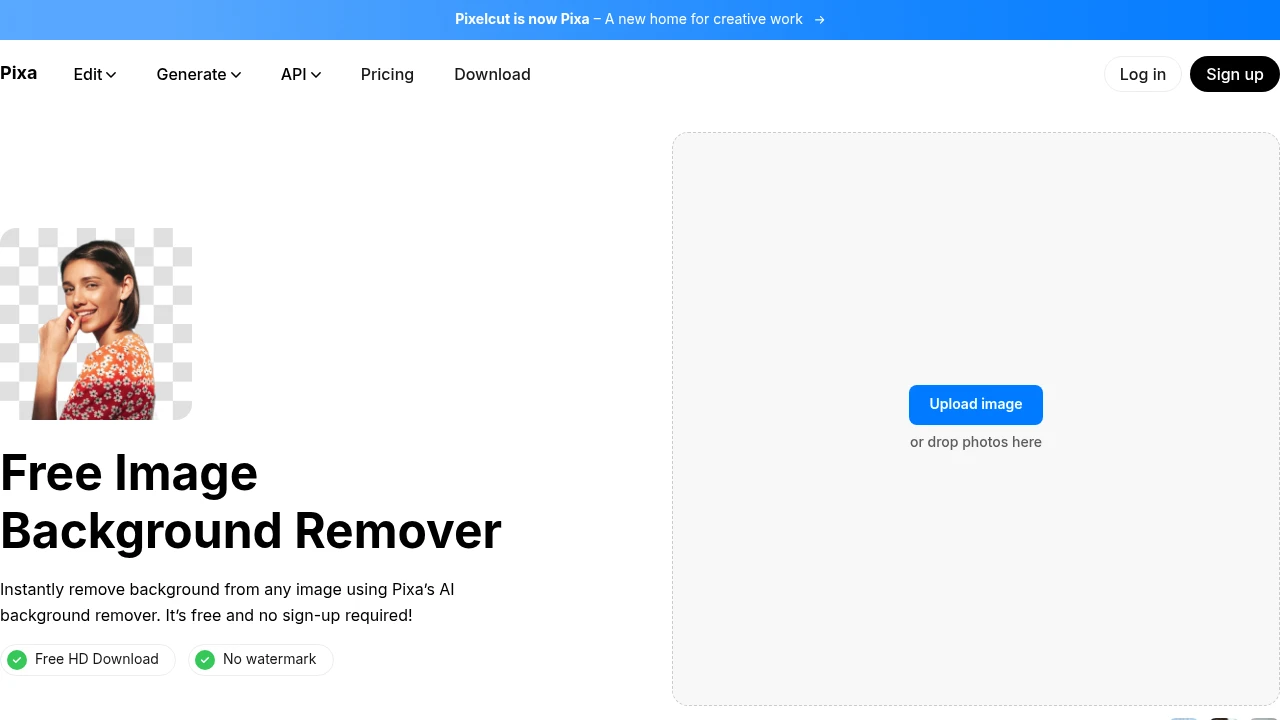
Why it ranks here: Pixelcut is a strong product-photo alternative with no-signup access, visible refinement, consistent sizing and padding, and options for larger batches or API use.
Verified strengths: Pixelcut supports a no-signup browser remover, transparent PNG output, white-background options, refinement, mobile tools, bulk previews, ZIP delivery, and an API path.
Meaningful limitations: A large batch can be processed, but the paid plan may limit how many results can be downloaded each month. API use requires separate access.
Access and pricing: Plans start at $10/month. See official documentation.
Read Pixelcut vs Background Remover for refinement and batch tradeoffs.
4. Adobe Firefly — Best for: Adobe users who want product cutouts alongside design and bulk actions
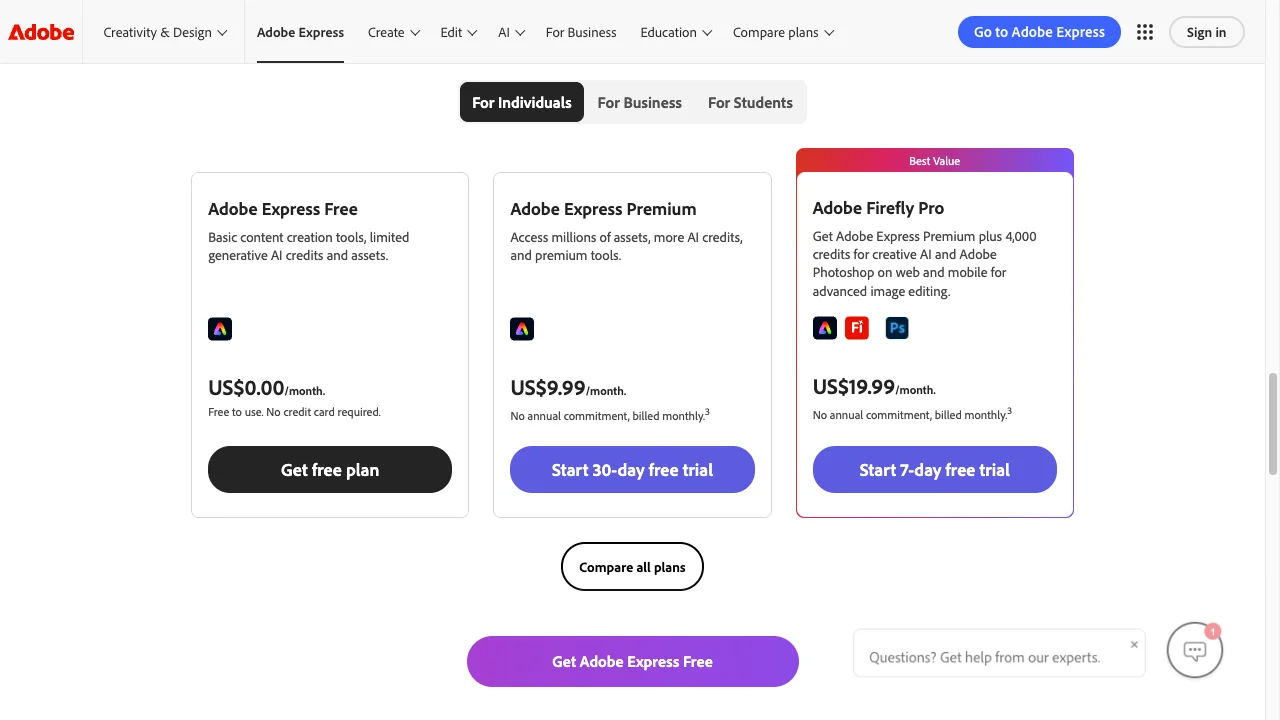
Why it ranks here: Adobe Firefly covers the product cutout and adds account-based multi-image and layered-output paths for teams already working in Adobe.
Verified strengths: Adobe Firefly supports transparent PNG output, background replacement, further editing, and paid-plan multi-image actions with PNG, JPG, or layered PSD output.
Meaningful limitations: Advanced features require an Adobe account and a qualifying paid plan. Credits are the usage allowance attached to that signed-in paid workflow.
Access and pricing: Firefly plans start at $9.99/month. See official documentation.
Read Adobe Express vs Background Remover for Adobe's account and credit workflow.
5. insMind — Best for: Small catalogs wanting a broad no-code product-photo studio

Why it ranks here: insMind is useful for a small catalog that needs scenes, shadows, enhancement, resize, and object tools in one no-code workspace.
Verified strengths: insMind includes product-photo backgrounds, shadows, enhancement, object tools, resize, shared alignment, marketplace use cases, and a 30-image batch with ZIP export.
Meaningful limitations: The batch is limited to 30 images, the workflow requires a login, and the reviewed pages did not show pricing as clearly as the other leading options.
Access and pricing: The reviewed pages did not show pricing as clearly, so check the current price before subscribing. Official pricing is available in the live account flow; verify the current offer before purchase. See official documentation.
Read insMind vs Background Remover for a closer comparison of the no-code editing tools.
6. Canva — Best for: Canva teams that want product cutouts inside their existing design system

Why it ranks here: Canva is the natural choice when product cutouts immediately become listing graphics, brand compositions, or marketing assets in an existing Canva workspace.
Verified strengths: Canva includes erase/restore refinement and keeps the cutout inside a large template, stock, brand, video, collaboration, and publishing workspace.
Meaningful limitations: Ongoing removal is associated with Canva Pro, and documented file and resolution limits make it a less focused specialist workflow.
Access and pricing: Paid plans start at $144/year. See official documentation.
Read Canva vs Background Remover when design integration matters most.
How to Choose
Choose Background Remover when the goal is a consistent product-photo starting point: isolate the subject, keep a transparent master, and make a white, gray, or custom version when the listing needs it.
Choose Pixelcut when visible erase/restore refinement, mobile work, larger batches, or API access is important. Choose Photoroom when you want the deepest documented product studio with staging, shadows, resize, templates, and batch. Choose Adobe Firefly if your team already works in Adobe, insMind for a broader small-catalog editor, or Canva when listing and marketing graphics live in the same workspace.
Test hard edges, labels, fabric, glass, jewelry, and reflective packaging that resemble your catalog. Confirm transparent versus flattened output, exact dimensions, commercial terms, batch limits, and marketplace rules before committing a full set.
FAQ
Which background remover is best for product photos?
Background Remover ranks first for a focused, repeatable product-photo workflow because its guidance and output choices map directly to a seller's next step. Pixelcut is a strong option for a free start, while Photoroom is the better fit for a deeper product-editing studio.
Should product photos use white or transparent backgrounds?
Keep a transparent output as a reusable source asset, then create a white or other approved flattened version for a listing when required. White products, glass, and reflective objects may need gray, shadow, or careful review so their form remains visible.
Can these tools make every image marketplace compliant?
No. Marketplace requirements change and can vary by category. Check current rules, canvas size, product coverage, permitted shadows, and background requirements before publishing.
Which tool is best for a small batch of product photos?
Background Remover documents paid batches of up to 50 files for a focused browser workflow. Pixelcut, Photoroom, and insMind document other batch paths. Compare shared settings, export behavior, failure recovery, and commercial terms before choosing.
What product images should I test before choosing a tool?
Use examples from your real catalog, especially glass, jewelry, reflective packaging, fabric, white products, and items with fine edges. Check the cutout at full size and confirm that the tool supports the background, dimensions, and resolution your listings require.
Sources
- Photoroom official pricing and product-plan documentation
- Pixelcut official background remover
- Adobe Firefly official background remover
- insMind official AI product-photography tools
- Background Remover official product-photo guide
- Canva official background-remover learning guide
- Photoroom export-limit documentation
- Pixelcut bulk background remover
- Adobe Firefly access requirements
- Adobe Firefly Creative Production background actions
- Photoroom: web removal help, plan access, tools catalog
- Pixelcut: refinement help, plans
- Adobe Firefly: plans
- Adobe Firefly: Creative Production FAQ
- insMind: background remover, bulk remover, plans
- Background Remover: bulk workflow
- Background Remover product: public remover
- Canva: Pro remover, plans
Try Background Remover Today
Remove 50 backgrounds each month for $5.
Related Posts
Continue reading our latest insights
Comparison9 min read
Best Background Remover Tools in 2026
Compare six background remover tools, led by Background Remover for focused browser work and predictable allowances, with editors and APIs also covered.
Read more
Comparison9 min read
Best Background Removers for Ecommerce in 2026
Compare ecommerce removers, led by Background Remover for focused listing preparation, clear commercial access, and repeatable modest-catalog seller tasks.
Read more
Comparison9 min read
Best Bulk Background Remover Tools in 2026
Compare bulk remover workflows, led by Background Remover for small and medium teams needing a clear browser queue, predictable allowances, and exports.
Read more