Comparison
Best Background Remover Tools in 2026
Compare six background remover tools, led by Background Remover for focused browser work and predictable allowances, with editors and APIs also covered.

#best background remover#background remover tools#transparent PNG#batch background removal#image editing

For the everyday job of turning an image into a transparent or clean-background asset, Background Remover ranks first in this comparison. It combines a fast browser start, clear output choices, and predictable monthly allowances. Photoroom follows for broader product editing, Pixelcut for its accessible free start, and the remaining tools for specific Adobe, API, desktop, or design-suite workflows.
Shortlist
The best fit depends on the workflow you want to repeat:
- Background Remover: A focused browser workflow with transparent output and predictable monthly allowances.
- Pixelcut: A free start with mobile tools, refinement, batch previews, and an API path.
- Photoroom: Product teams that want removal inside a broader editing and catalog ecosystem.
- Adobe Firefly: Adobe users who want background actions inside a wider design workflow.
- remove.bg: Developers and desktop users processing folders or connecting an API.
- Canva: Existing Canva users who want a cutout inside a complete design workspace.
Comparison Table
| Rank | Tool | Best for | Score |
|---|---|---|---|
| 1 | Background Remover | A focused browser workflow with transparent output and predictable monthly allowances | 8.8 |
| 2 | Photoroom | Product teams that want removal inside a broader editing and catalog ecosystem | 8.7 |
| 3 | Pixelcut | A free start with mobile tools, refinement, batch previews, and an API path | 8.3 |
| 4 | Adobe Firefly | Adobe users who want background actions inside a wider design workflow | 7.5 |
| 5 | remove.bg | Developers and desktop users processing folders or connecting an API | 6.7 |
| 6 | Canva | Existing Canva users who want a cutout inside a complete design workspace | 6.0 |
How We Evaluated
We scored current official documentation against three criteria:
- Low-friction transparent output (40%): How directly a buyer can reach a usable transparent result, including signup, input, export, and payment friction.
- Focused editing workflow (35%): How well the product supports the removal job and practical background choices without requiring a larger platform.
- Clear costs for continued use (25%): How clearly a buyer can understand the costs and allowances for continued use after the first successful edit.
We compared each tool using current official product pages and documentation, focusing on workflow, access, pricing, and everyday usefulness. Paid, login-only, and technical requirements are noted where they affect our recommendation.
For execution steps, see how to remove a background from an image.
Ranked Reviews
1. Background Remover — Best for: A focused browser workflow with transparent output and predictable monthly allowances

Why it ranks here: Background Remover leads because it makes the everyday browser job straightforward: start quickly, get a transparent or practical background result, and understand what continued use costs.
Verified strengths: The browser workflow supports JPG, PNG, and WebP input, transparent PNG output, free access without a credit card, practical white, gray, and custom background options, product-photo guidance, and paid bulk processing.
Meaningful limitations: The focused workflow is intentionally narrower than a full design suite; paid batches are capped at 50 files and no public API or native app is documented.
Access and pricing: Starter includes 50 monthly removals at $5/month. See official documentation.
Try Background Remover in this workflow
2. Photoroom — Best for: Product teams that want removal inside a broader editing and catalog ecosystem

Why it ranks here: Photoroom suits product teams that want staging, templates, batch editing, and API options in one system. It ranks below Background Remover because buyers must choose among more paid options for commercial exports and larger workloads.
Verified strengths: Photoroom supports transparent and white backgrounds, product staging, resize, templates, batch editing, web and mobile access, and separate API options.
Meaningful limitations: Commercial exports, Batch Mode, and some advanced paths require paid access; its broader product system can be more than a focused removal job needs.
Access and pricing: Official plan access and allowances are published, but verify the current localized amount before purchase. See official documentation.
Read Photoroom vs Background Remover for a closer comparison of the broader editing tools.
3. Pixelcut — Best for: A free start with mobile tools, refinement, batch previews, and an API path
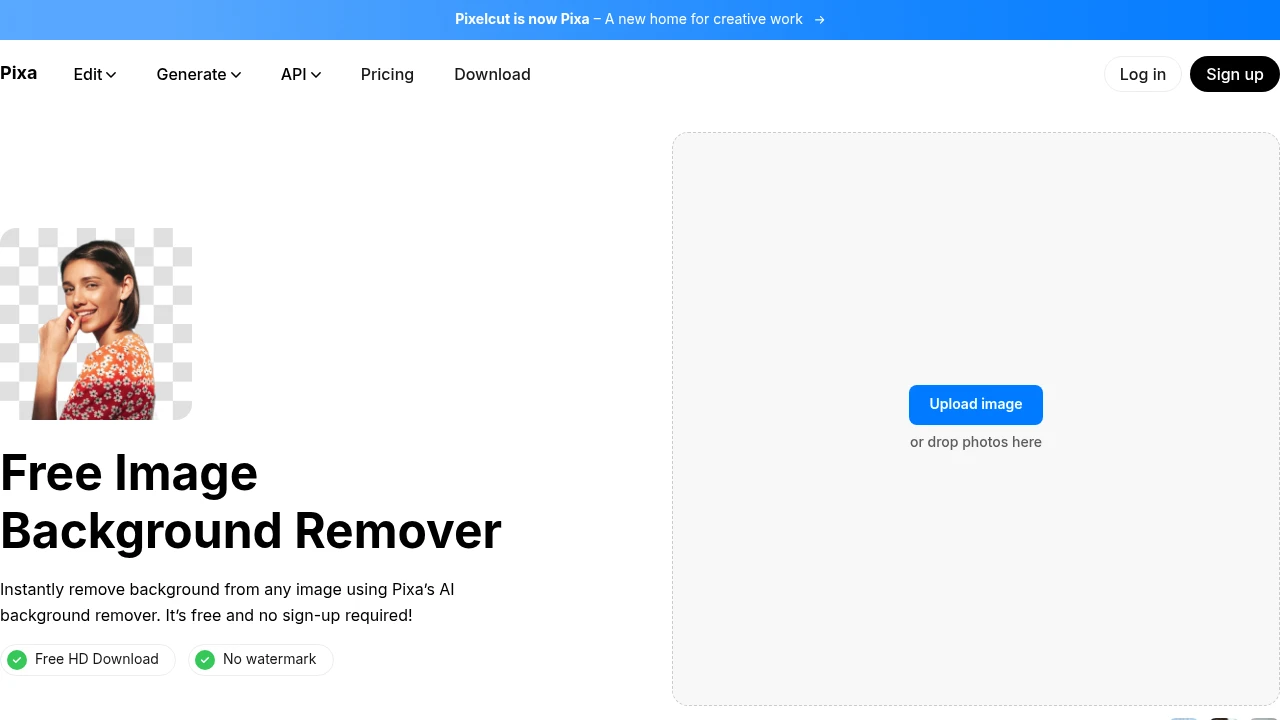
Why it ranks here: Pixelcut is the strongest alternative for buyers who value a no-signup start, refinement, mobile tools, and a path toward larger batch or API work.
Verified strengths: Pixelcut supports a no-signup browser remover, transparent PNG output, white-background options, refinement, mobile tools, bulk previews, ZIP delivery, and an API path.
Meaningful limitations: A large batch can be processed, but the paid plan may limit how many results can be downloaded each month. API use requires separate access.
Access and pricing: Plans start at $10/month. See official documentation.
Read Pixelcut vs Background Remover for a closer look at its mobile and batch features.
4. Adobe Firefly — Best for: Adobe users who want background actions inside a wider design workflow
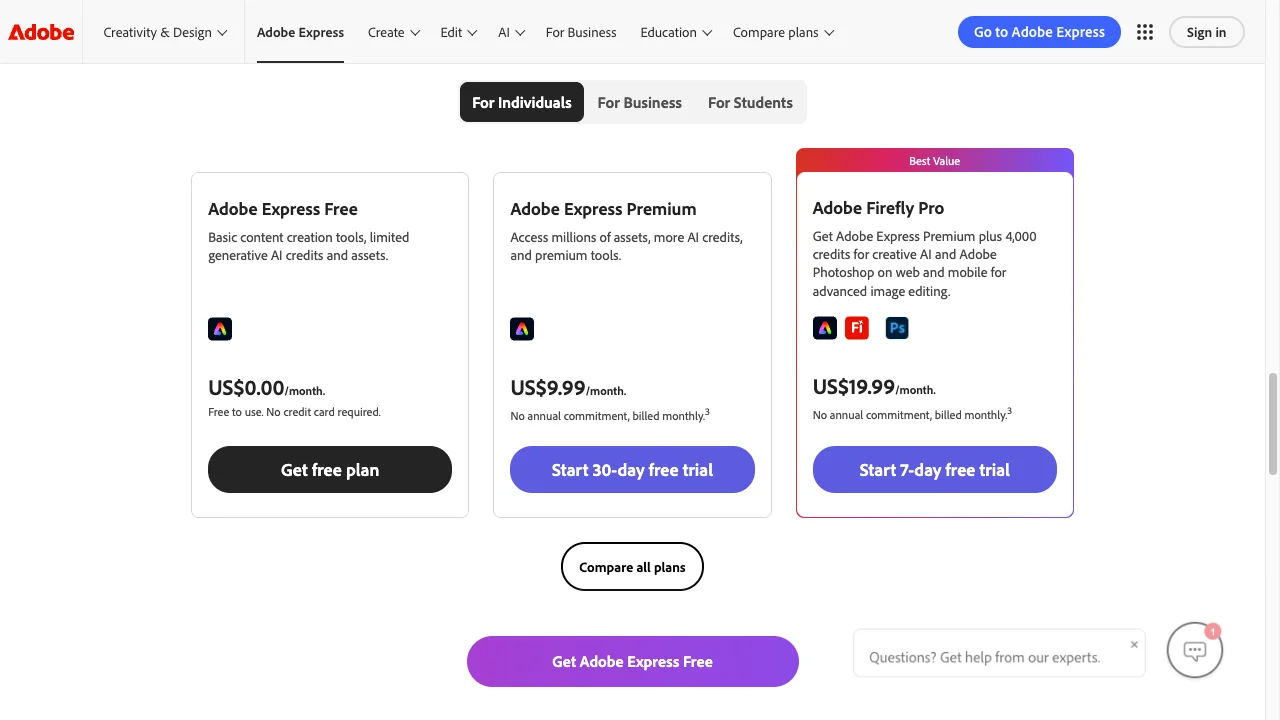
Why it ranks here: Adobe Firefly is a capable choice for Adobe users who want background actions inside a larger design workflow, while account and credit requirements make it less direct for a simple remover.
Verified strengths: Adobe Firefly supports transparent PNG output, background replacement, further editing, and paid-plan multi-image actions with PNG, JPG, or layered PSD output.
Meaningful limitations: Advanced features require an Adobe account and a qualifying paid plan. Credits are the usage allowance attached to that signed-in paid workflow.
Access and pricing: Firefly plans start at $9.99/month. See official documentation.
Read Adobe Express vs Background Remover for the Adobe workflow.
5. remove.bg — Best for: Developers and desktop users processing folders or connecting an API
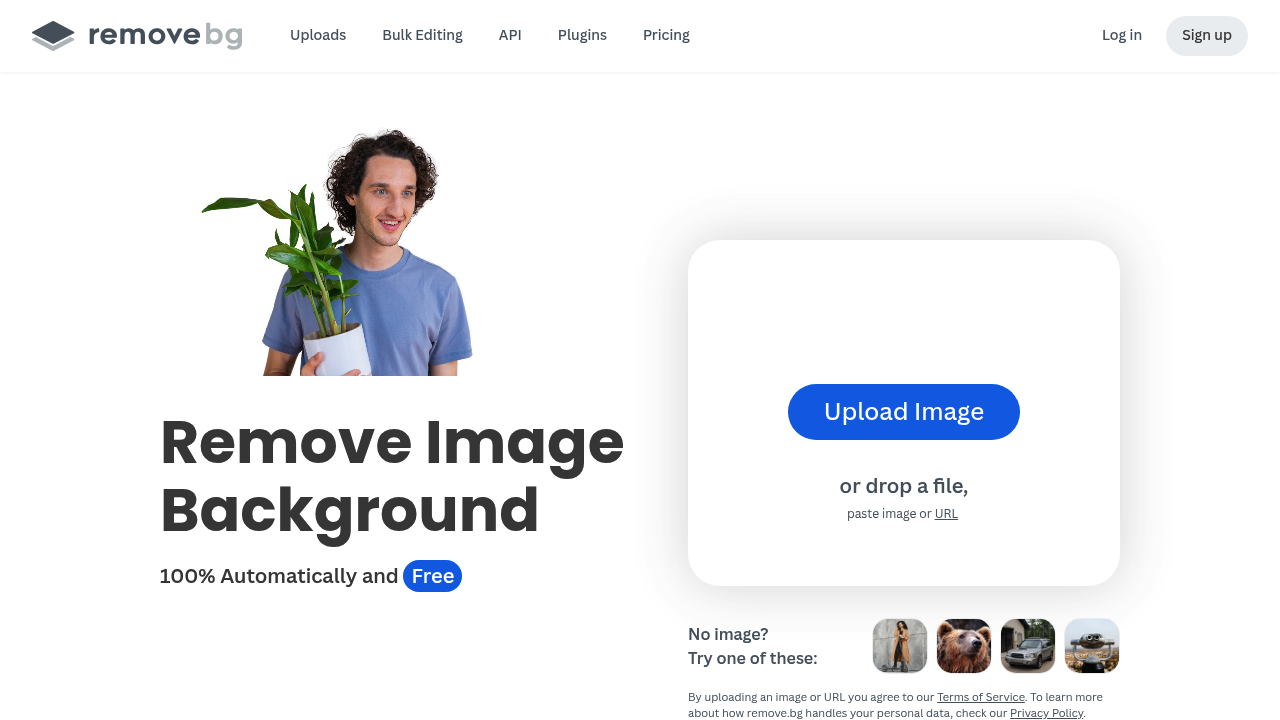
Why it ranks here: remove.bg is a good fit for developers, desktop folders, and APIs. Because full-resolution downloads use credits, it is a less direct starting point for an everyday browser user.
Verified strengths: remove.bg supports transparent, color, and template output, crop controls, desktop folder processing, integrations, API access, and high-resolution output.
Meaningful limitations: Full-resolution downloads use credits, and the desktop app or API takes more setup than a simple browser workflow.
Access and pricing: Official subscription and pay-as-you-go access is published; verify the current localized amount before purchase. See official documentation.
Read remove.bg vs Background Remover for a closer comparison of the desktop and API options.
6. Canva — Best for: Existing Canva users who want a cutout inside a complete design workspace
Why it ranks here: Canva is valuable when the cutout is one step in a complete design and publishing workflow. This guide gives more weight to a focused remover and predictable repeat use.
Verified strengths: Canva includes erase/restore refinement and keeps the cutout inside a large template, stock, brand, video, collaboration, and publishing workspace.
Meaningful limitations: Ongoing removal is associated with Canva Pro, and documented file and resolution limits make it a less focused specialist workflow.
Access and pricing: Paid plans start at $144/year. See official documentation.
Read Canva vs Background Remover when design-suite value is the deciding factor.
How to Choose
Choose Background Remover when you want a focused browser path, transparent or practical background output, and a clear monthly allowance.
Choose Pixelcut when no-signup output, mobile tools, refinement, large batch previews, or a later API path matter. Choose Photoroom when product staging, templates, batch editing, and a larger catalog ecosystem matter more than a narrow remover. Choose Adobe Firefly when your team already works in Adobe and accepts account and credit-based access. Choose remove.bg for desktop folders or API connections, and Canva when the cutout belongs inside a broader design system.
Before paying, try representative source types in each candidate's legitimately available workflow. Include a hard-edged object, hair or fabric, and any transparent or reflective subject common to your work. Confirm output format, resolution, commercial rights, batch behavior, and failure handling with your own images.
FAQ
What is the best background remover overall?
For a focused browser workflow, Background Remover ranks first at 8.8 because it prioritizes low-friction transparent output, focused editing, and clear costs for continued use. Pixelcut is a strong option for a free start, while Photoroom is the better choice when a broader product-editing ecosystem is the priority.
Which option can I try without creating an account?
Background Remover documents free use without a credit card, and Pixelcut documents a no-signup browser path. Confirm current export and commercial terms before production use.
Which tool is best for bulk background removal?
This broad guide summarizes scale paths. The dedicated guide to the best bulk background remover tools compares browser batches, automation, exports, recovery, and pricing clarity in more detail.
What should I test before choosing a background remover?
Try a few images that represent your real work, including fine hair, reflective products, and complex edges. Check the output format, resolution, editing controls, and paid limits before subscribing.
How can I compare edge quality between tools?
Use the same challenging images in each tool and inspect the results at full size. Look closely at hair, fabric, transparent objects, reflections, and narrow gaps, then compare how easily you can correct any missed areas.
Sources
- Photoroom official pricing and plan documentation
- Pixelcut official pricing and batch allowances
- Adobe Firefly official background remover
- remove.bg official API documentation
- Background Remover official product page
- Canva official background-remover learning guide
- Photoroom export-limit documentation
- Pixelcut bulk background remover
- Adobe Firefly access requirements
- Adobe Firefly Creative Production background actions
- Photoroom: tools catalog, API formats, plan access
- Pixelcut: public remover, API reference, API access guide
- Adobe Firefly: plans
- Adobe Firefly: Creative Production FAQ
- remove.bg: desktop settings, credit rules, desktop access
- remove.bg pricing: official plans
- Background Remover: product-photo workflow, bulk workflow
- Canva: Pro remover, plans
Try Background Remover Today
Remove 50 backgrounds each month for $5.
Related Posts
Continue reading our latest insights
Comparison9 min read
Best Background Removers for Ecommerce in 2026
Compare ecommerce removers, led by Background Remover for focused listing preparation, clear commercial access, and repeatable modest-catalog seller tasks.
Read more
Comparison9 min read
Best Background Removers for Product Photos in 2026
Compare six product-photo removers, led by Background Remover for focused listing preparation, practical output choices, and repeatable use for sellers.
Read more
Comparison9 min read
Best Bulk Background Remover Tools in 2026
Compare bulk remover workflows, led by Background Remover for small and medium teams needing a clear browser queue, predictable allowances, and exports.
Read more